Newest Articles
Surgery to address carpal tunnel syndrome (CTS) is the most common upper limb orthopedic surgery in the United States with annual costs estimated in excess of $2 billion. In western countries, the waitlist for such a procedure is often greater than five months, and the demand is expected to double in the coming decades. This [..]
The term whiplash refers to a sudden forward (acceleration) and backward (deceleration) movement that results in hyperextension of the cervical spine. This process can injure the various soft tissues in proximity of the neck, which can lead to a wide collection of symptoms that fall under the umbrella term whiplash associated disorders (WAD). While this [..]
Total knee arthroplasty (TKA) is the most performed operating room procedure in the United States, and the number of surgeries is projected to increase by 400% (to 3.5 million a year) in the next twenty years due to prolonged longevity, the rise in obesity, and increasing rates of osteoarthritis. The surgery itself traumatizes the surrounding [..]
Historical Context
Alfred Bernhard Nobel was a Swedish chemist, engineer, inventor, and businessman. He was born in 1833 and died in 1896. He held 355 patents in his lifetime, the most notorious of which was for dynamite. Dynamite used the explosive power of nitroglycerin. Nobel patented dynamite in 1867.
Nobel amassed a fortune during his [..]
When it comes to the low back pain patient, it’s common for the muscles that attach to the hip and pelvis (hamstrings, psoas, piriformis, and tensor fasciae latae) to be overly active or tight, while at the same time, the core muscles are deconditioned and weak. When it comes to managing low back pain, should [..]
In normal posture, the center of the shoulder joints should be vertically in line with the mastoid processes (the part of the skull just behind the ears). Unfortunately, excessive device use can lead to forward head posture where the head rests forward of the shoulders, which can lead to a condition called upper cross syndrome [..]
Peripheral neuropathy (PN) results from damage to the nerves that carry motor and sensory information from the brain and spinal cord to the rest of the body. This condition often causes weakness, numbness, and pain, usually in the feet and/or hands, but it can affect the organ systems as well. Although PN can result from [..]
The low back is the most common body region to suffer from chronic pain (1).
Low back pain is the second most common reason for primary care physician visits, and it is the most costly medical condition in the United States (2).
The most common tissue source for low back pain is the intervertebral disc [..]
In addition to more common symptoms like neck pain and stiffness, the whiplash-associated disorders (WAD) patient may also experience vertigo or dizziness. However, the link between vertigo and WAD is somewhat controversial. In 2021, a team of international researchers published a meta-analysis (a review of previously published studies) entitled “The Enduring Controversy of Cervicogenic Vertigo, [..]
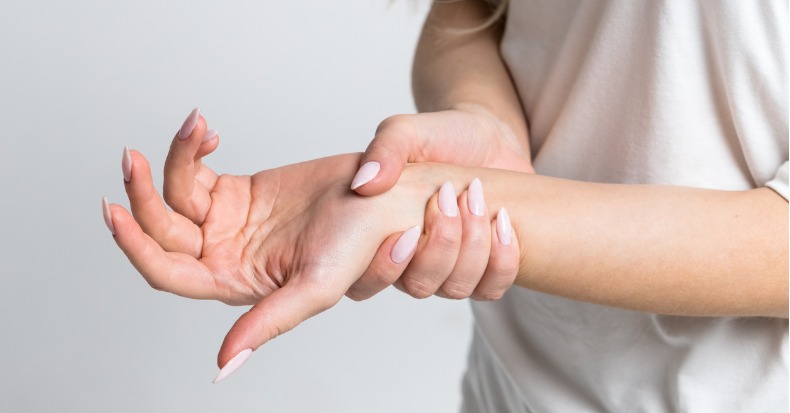
Carpal tunnel syndrome (CTS) occurs when the mobility of the median nerve is constricted as it passes through the wrist, leading to symptoms in parts of the hand and fingers such as numbness, tingling, pain, and weakness. While it’s possible for CTS to arise following an acute injury—like a wrist fracture—or from hormonal changes that [..]
When it comes to the human body, an issue in one area can contribute to problems elsewhere. For example, one study found that three-in-five patients with femoroacetabular (hip) impingement also suffer from clinically significant low back pain, and increased disability in one location is associated with greater disability in the other. When it comes to [..]
For over 100 years, individuals have sought out chiropractic care to address musculoskeletal conditions (like back pain) outside of the traditional medical model, which can include medications, injections, and surgery. In addition to reducing pain and improving function, chiropractic care can benefit the healthcare system (and the individual patient) by not only being more cost [..]